
Colorado’s dry climate, recurring wildfire smoke, and dusty Front Range conditions make indoor air a real concern for homeowners and business operators alike. If you’ve ever wondered “does duct cleaning really work?” you’re asking the right question – and the honest answer is more nuanced than most companies will tell you.
Does Duct Cleaning Work? (Quick Answer for Colorado Homeowners)
Here’s the straightforward truth: duct cleaning has not been proven to prevent health problems in every home. The Environmental Protection Agency states that routine air duct cleaning is generally not necessary, and expert consensus shows little evidence supporting it as a standard maintenance task. Light household dust in ducts poses no health risk on its own.
However, duct cleaning is effective under specific conditions – and Colorado creates those conditions more often than most states. Wildfire smoke infiltration, post-renovation debris, mold growth from condensation issues, and vermin infestations are all situations where whole-system HVAC cleaning done correctly can improve comfort, reduce odors, and support better indoor air quality.
When duct cleaning usually helps:
Visible mold inside ducts or on system components
Soot and odor from wildfire smoke events
Heavy dust or debris after construction or remodeling
Rodent or insect infestations in duct work
When it usually doesn’t:
Homes with normal dust levels and no specific contamination
As a substitute for regular filter changes and HVAC maintenance
When promised as a cure for medical conditions
Fiction vs. Fact: What Really Affects Your Indoor Air in Colorado
Many Colorado homeowners believe dirty air ducts are the primary culprit behind household dust and allergy flare-ups. Others dismiss duct cleaning entirely as a scam. Neither extreme is accurate.
Fiction: Air ducts are the main source of dust and dirt. Fact: Most household dust settles on surfaces, not in ductwork. Dirty air ducts are not a primary source of airborne pollutants. The majority of indoor dust comes from people, pets, outdoor soil, and indoor activities like cooking and cleaning.
Fiction: Duct cleaning always fixes allergies. Fact: While removing concentrated contaminants can help sensitive family members, results vary by individual and home conditions.
Fiction: It’s always a scam. Fact: When ducts have genuine contamination, professional cleaning addresses a real problem.
Indoor air problems in Colorado are often driven by several factors beyond duct contamination alone: low humidity, wildfire smoke infiltration, unsealed building envelopes, and poor filtration all play significant roles. The Environmental Protection Agency confirms that normal dust adhering to air duct surfaces is not, by itself, a proven cause of health problems.
Consider a Fort Collins home near an active construction site. Visible dust on furniture and windowsills might seem like it’s blowing from the vents – but more dust actually enters through doors, windows, and gaps in the building envelope than through the HVAC system. Contrast that with a home where wildfire soot has infiltrated the air handling unit housing, blower, and supply registers – in that case, the ducts themselves become a real source of recirculating particulate matter.
When Air Duct Cleaning Really Works (EPA-Backed Scenarios)
Bee’s Air Duct Cleaning follows Environmental Protection Agency and NADCA guidance and does not recommend duct cleaning without cause. We’ll always tell you if your system doesn’t need it.
The three main EPA-recognized scenarios where cleaning ducts is beneficial:
Substantial visible mold growth inside sheet metal air ducts or on HVAC system components – for example, humidifier leaks in a 1990s Westminster home creating microbial contamination on the cooling coil and surrounding surfaces. Mold growth in ducts can affect indoor air quality for everyone in the building.
Vermin infestation – rodents or insects leaving droppings, nesting material, urine contamination, and other debris inside return air ducts and trunk lines. Duct cleaning may be needed if mold or vermin are present.
Ducts clogged with an excessive amount of dust or debris releasing particles into rooms – such as after heavy home renovations in a 20-year-old Loveland house. Post-construction duct cleaning is warranted in these situations, and duct cleaning can remove substantial debris when ducts are truly clogged.
Additional Colorado realities where duct cleaning works in practice:
After major wildfire smoke or fire damage events when soot and odor collect in system components – duct cleaning can eliminate musty odors from the HVAC system
After large remodels producing drywall dust and sawdust with supply registers left uncovered
In older homes (10–20+ years) that have never had the entire system cleaned and have pets or smokers, leading to greater exposure to accumulated contaminants
In these cases, full HVAC and ductwork cleaning, not just vacuuming vents, can reduce visible dust bursts from registers, reduce triggers for some respiratory and allergy issues, and support better airflow and HVAC performance.
What Is Air Duct Cleaning, Really? (Not Just "Vacuuming Vents")
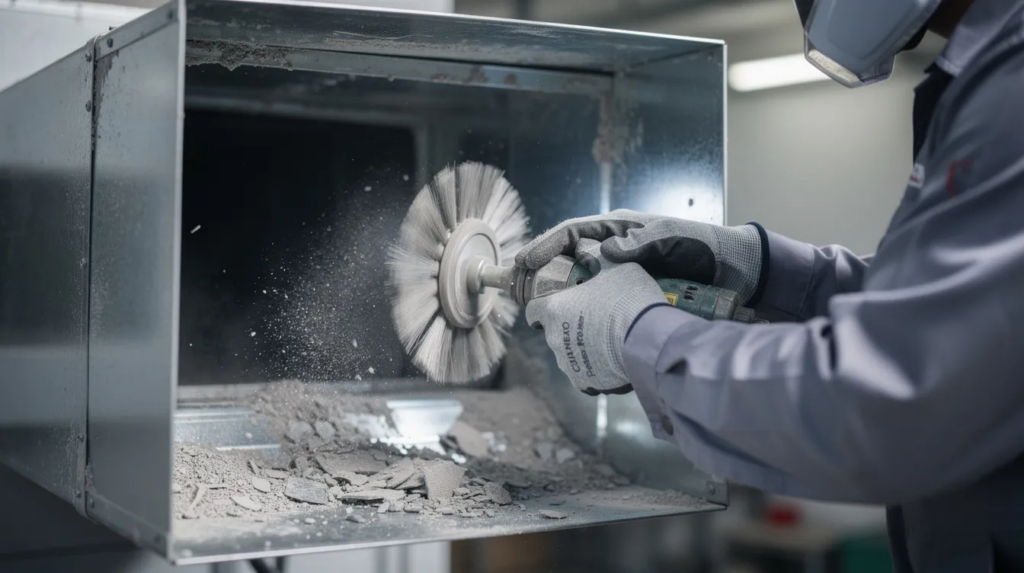
Proper air duct cleaning means cleaning the entire heating and cooling system- every component in your forced-air system- not just the supply and return grilles you can see. Duct cleaning should include all HVAC system components, because skipping upstream parts like the blower or coils leads to re-contamination and limited results.
A professional service like Bee’s Air Duct Cleaning in Northern Colorado will address:
Supply and return air ducts (trunk lines and branch runs)
Supply registers, grilles, and diffusers
Heat exchangers, evaporator and condenser coil cleaning (air ducts coils areas)
Condensate drain pans and drain lines
Fan motor, blower housing, and air handling unit housing or furnace cabinet
Bee’s uses the NADCA “Source Removal” method: contaminants are loosened with agitation tools and collected under continuous negative pressure so debris does not spread into your living space. Cleaning core HVAC components this way can improve system efficiency and prevent recurring duct contamination.
This approach applies differently depending on the setting, including residential and commercial duct cleaning in Denver and surrounding cities:
Residential home air duct cleaning in Northern Colorado communities
Commercial air duct and HVAC system cleaning in offices, warehouses, and multi-family buildings
Dryer vent duct cleaning, which targets a different but related fire-safety issue
How Duct Cleaning Is Done (Step-by-Step, the Right Way)
Here’s how Bee’s approaches duct cleaning services for Colorado homes and small commercial systems, following NADCA duct cleaning standards:
Inspection: Camera or visual inspection of accessible air ducts, supply and return trunks, furnace/air handler, plus discussion of symptoms – odors, dust bursts, hot/cold spots. Work begins only after this assessment.
Protect and prepare: Protecting floors and furnishings, setting up access ports and access holes to the HVAC system, confirming power and gas shutoffs.
Establish negative pressure: Connecting a high-powered vacuum to the duct system. Continuous negative pressure prevents contaminants from spreading during cleaning – an inadequate vacuum collection system is one of the biggest problems with low-quality providers.
Agitation: Using specialized tools to dislodge dirt in ducts before vacuuming – mechanical brushes, air whips, and compressed air nozzles break contaminants loose from surfaces. Soft-bristled brushes are recommended for fiberglass duct cleaning to avoid damaging liner material.
Source cleaning: Contact vacuuming and brushing other components – coils, blower, fan motor housing, registers, and grilles.
Optional antimicrobial treatment: Chemical biocides should only be applied after mechanical cleaning, and only when there is confirmed microbial contamination on non-porous surfaces. Bee’s avoids unnecessary biocide fogging.
Final inspection: Before/after photos or video confirm that no visible debris remains and access holes are sealed.
Be aware that ventilation duct cleaning may temporarily elevate airborne pollutants during the process – which is exactly why proper containment and negative pressure matter. Improper duct cleaning can worsen indoor air quality issues rather than improve them.
Does Duct Cleaning Improve Indoor Air Quality and Health?
The Environmental Protection Agency’s position is clear: research has not conclusively shown that routine duct cleaning prevents health problems or significantly lowers particle levels in every home. Duct cleaning is not necessary for routine HVAC maintenance. Such claims should be viewed with skepticism.
For generally clean systems with no mold, vermin, or heavy debris: cleaning air ducts may have little measurable impact on indoor air or allergy symptoms
For homes with confirmed duct contamination or strong odors: air duct cleaning can remove a concentrated source of other contaminants from the HVAC system
Duct cleaning can reduce bursts of more dust from registers and help some sensitive occupants, but health benefits vary by individual and home
Bee’s positions duct cleaning as one tool in a broader indoor air quality strategy, alongside:
Using high-efficiency HVAC filter options (MERV ratings appropriate for the system) – HVAC filter changes are more effective than routine duct cleaning for day-to-day air quality
Sealing duct leaks and improving the building envelope
Humidity control, which is crucial for maintaining indoor air quality, especially in Colorado’s dry winters
Considering added filtration like portable HEPA units where needed, particularly for allergy sufferers
Red Flags and Duct Cleaning Scams in Colorado
If you’ve received a mailer or social media ad offering “cheap duct cleaning” along the Front Range, be cautious. These loss-leader offers rarely cover whole-system cleaning and frequently lead to surprise upsells once the technician is on-site. Inadequate duct cleaning can release more contaminants than before.
Warning signs to avoid:
Unusually low prices that cannot possibly cover cleaning the entire system – often they only vacuum a few vents
Companies unwilling to inspect ducts or show contamination evidence, yet insisting “everyone needs annual cleaning”
High-pressure upsells for unnecessary chemical biocides or sealants, contrary to Environmental Protection Agency guidance
Duct cleaners who cannot explain whether they follow NADCA standards or show proof of insurance – check with your local Better Business Bureau and business bureau listings
Technicians who skip the HVAC equipment (coils, blower, air handler) and only clean visible registers
What reputable duct cleaning companies do:
Provide a clear, written agreement outlining scope of work and price before starting
Explain whether your situation likely warrants cleaning based on age, conditions, and signs of duct contamination
Use proper negative-pressure equipment and agitation tools – not just a shop-vac
Offer before/after verification via photos or video of your specific air ducts and system components
Avoid duct cleaners making unsubstantiated health claims. No company that approves duct cleaning companies can guarantee their work will cure asthma or COPD.
Costs, Frequency, and When to Schedule Duct Cleaning
The Environmental Protection Agency and NADCA both view air duct cleaning as “as-needed,” not a fixed annual task. Costs depend on the services offered and system specifics.
Typical cost ranges in Colorado:
Small homes and condos: often toward the lower end of the nationally cited range – duct cleaning costs range from $450 to $1,000 depending on the total cost of components addressed
Larger homes, multi-system houses, or heavily contaminated air ducts: toward or above the high end of that range
Commercial and multi-family projects: quoted individually after an on-site walkthrough
When to schedule:
After major renovations that create drywall dust or sawdust
After verified mold or vermin issues have been corrected
Approximately every 5–8 years for busy Colorado households with pets and high dust loads, assuming no wildfire smoke or water damage events
On a case-by-case basis for commercial buildings, based on occupancy, processes, and indoor air complaints
Signs it’s time to call for an inspection:
Visible dust or other debris blowing from vents when the HVAC system turns on
Persistent musty or smoky odors traced to the air conditioning system or heating system
Cold or hot spots and reduced airflow even after regular filter changes and regular maintenance
History of rodents or insects accessing ductwork
Homeowners should get written estimates from at least three companies before committing.

Bee's Air Duct Cleaning Services Across Colorado (How We Solve These Problems)
Bee’s Air Duct Cleaning is a Colorado-based, NADCA-certified duct cleaning company that provide duct cleaning services for both homes and businesses. We’re a NADCA-certified, woman-owned company with over a decade of experience, and every job is staffed by a certified technician.
Residential air duct cleaning services:
Whole-home HVAC system cleaning to remove dust, pet dander, allergens, and other contaminants
Source Removal method to clean supply and return air ducts, registers, trunk lines, and accessible furnace/air handler components
Serving Northern Colorado communities including Fort Collins, Greeley, Loveland, Longmont, and Boulder
Commercial air duct cleaning:
NADCA-informed cleaning for offices, schools, medical facilities, light industrial, and specialized buildings
Addressing indoor air complaints, odor issues, and airflow or energy-efficiency problems in large HVAC systems
Ability to work around business hours to minimize downtime
Multi-family and HOA properties:
On-site inspections required before quoting, with access to at least one unit
Tailored plans for shared duct systems or individual in-unit systems in apartments, townhomes, and condos
Removal of lint and debris from ground-level, second-story, and rooftop dryer vents
Fire safety focus – the U.S. Fire Administration links clogged dryer vents to thousands of house fires annually
Use of specialized vent brushes, high-powered vacuums, and reverse compressed air
Bee’s also helps with ongoing strategies: better filtration, sealing obvious duct leaks, and scheduling cleaning aligned with renovations or wildfire events.
Practical Tips to Prevent Duct Contamination and Protect Your Indoor Air
Use this checklist to reduce the need for frequent duct cleaning and protect your indoor air between professional services:
Use the highest-efficiency air filter recommended by your HVAC system manufacturer, and change it on the regular filter schedule – more often with pets or nearby construction
Seal and cover supply registers and return grilles during remodeling, sanding, or drywall cutting to keep debris out of air ducts
Fix water leaks quickly and ensure condensate drain pans drain properly to prevent mold growth inside HVAC components
Have fuel-burning appliances (furnace, water heater) inspected annually to manage combustion safety and avoid soot buildup
Keep return air grilles clear of furniture and clutter to maintain proper airflow
Building-specific tips:
For Colorado homes with unfinished basements or crawlspaces: seal duct joints and insulate ducts running through unconditioned spaces
For commercial and multi-family buildings: schedule routine maintenance and coil cleaning so contamination does not accumulate upstream
If you’re unsure whether your indoor air problems stem from duct contamination or other sources, contact Bee’s for an inspection as the first step rather than jumping straight into cleaning.
How to Evaluate and Hire a Duct Cleaning Company in Colorado
As we covered above, air duct cleaning can work – but only when done by competent, properly equipped professionals. When you hire duct cleaners, the quality of the company matters as much as whether cleaning is warranted.
Key evaluation criteria:
Confirm training and adherence to NADCA certification standards for duct cleaning companies – choose companies certified by the National Air Duct Cleaners Association
Verify Colorado business registration, insurance, and any required licenses
Ask for a detailed, written scope: which air ducts, which HVAC system components, whether the cooling coil and blower are included, and how they will access and reseal duct work through access ports
Clarify equipment – truck-mounted or industrial portable vacuums capable of maintaining negative pressure, proper agitation tools, HEPA filtration if vacuum exhausts indoors
Request before/after documentation of your specific system, not stock photos
Before deciding:
Talk to at least three duct cleaning companies and get written estimates before deciding on duct cleaning
Be skeptical of health claims that contradict Environmental Protection Agency statements – promises to “cure asthma” solely through duct cleaning are a red flag
Check references to ensure customer satisfaction with services, and read independent reviews
Bee’s Air Duct Cleaning is here for an honest assessment, even if the conclusion is that your air ducts don’t need cleaning right now. When you call us, you’ll talk to a Bee’s team member who will address your questions, walk through what we see, and give you a written agreement before any work begins.
