
After a fire or heavy wildfire smoke event, one of the first questions Colorado property owners ask is whether their air ducts need professional cleaning. The answer depends on what actually made it into the duct system. Here is a practical guide to help you figure out what your HVAC system needs, what the cleaning process looks like, and when to call in a team like Bee’s Air Duct Cleaning.
Quick Answer: Do You Need Smoke Damage Air Duct Cleaning?
Most light wildfire smoke events only require a filter change and ventilation flush, typically a $30–$60 investment. But when confirmed soot or ash has entered your air ducts, professional HVAC cleaning becomes necessary to protect indoor air quality and prevent your cooling system or furnace from recirculating contaminants.
In Colorado, from the Front Range foothills to Northern Colorado communities, duct cleaning is recommended when there is visible soot, ash, or greasy smoke residue inside registers, on the blower wheel, or coating the evaporator coil, or when a smoke smell clearly intensifies each time the HVAC system kicks on. The EPA advises duct cleaning only when there is visible contamination, and Bee’s Air Duct Cleaning follows that same guidance. Duct cleaning is recommended only when contamination is verified, not automatically after every smoke event.
Here is the simplest way to think about it: if you see soot in registers, smell strong smoke odors when the system runs, or had an active house or building fire, schedule a professional inspection right away. If you only experienced outdoor air haze from a distant wildfire with no deposits inside, start with fresh filters and surface cleaning. Bee’s provides residential and commercial inspections across Colorado as part of its broader professional ductwork cleaning services to help you determine whether full smoke damage air duct cleaning is truly necessary.
How Smoke and Fire Damage Impact Air Ducts, HVAC Ducts, and Air Quality
Smoke from a house fire, apartment fire, commercial fire, or Colorado wildfire can enter duct systems even when flames never touched the HVAC equipment. During the Marshall Fire in late 2021, over 1,000 homes were destroyed, yet hundreds of structurally intact homes had smoke, soot, and ash pulled deep into their HVAC ducts by normal air currents and pressure changes. Smoke particles can enter homes through ventilation systems and embed deep within ductwork surfaces, where they persist long after the fire event ends.
Hot air, pressure shifts from firefighting efforts, and even wind-driven ash can push fine soot particles into supply air ducts, return ducts, the furnace cabinet, blower assembly, evaporator coil, plenums, and drop ducts. Direct fire damage inside a structure typically produces heavy soot residue, structural charring, and melted duct liner. Indirect wildfire smoke damage is subtler – fine ash and persistent smoke odors with little visible staining. Nearby building fires fall somewhere in between, depending on wind and whether the HVAC system was running during the smoke event.
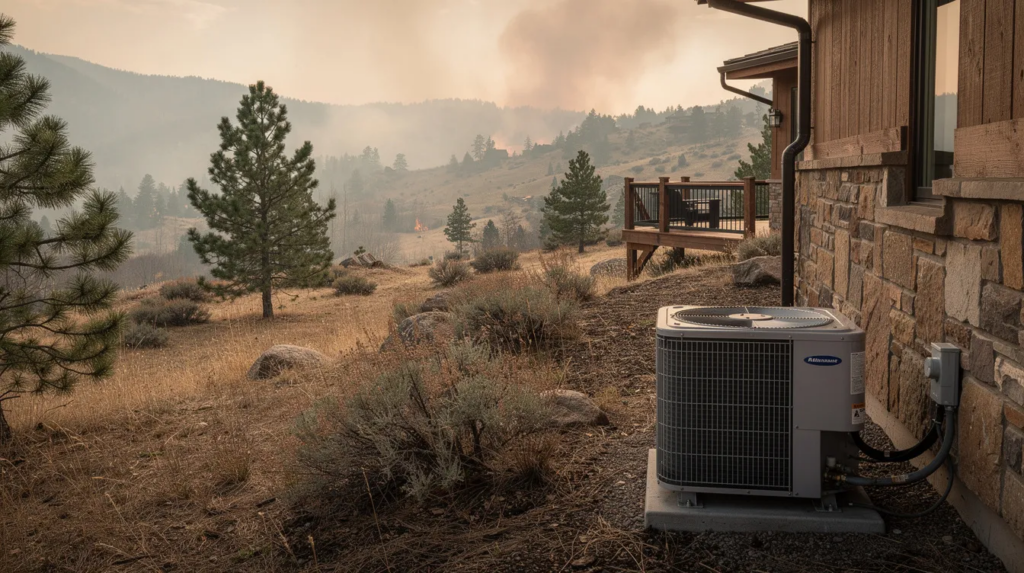
The health risks are significant. Fire damage can contaminate HVAC systems with toxic particles, including volatile organic compounds, and HVAC systems can recirculate soot and toxic residues after a fire throughout every room they serve. Toxic smoke can cause respiratory problems and allergic reactions, and children and the elderly face higher risks from contaminated air. Research has found indoor particulate matter can remain 5 to 10 times higher post-fire compared to pre-fire levels. Smoke residues in ductwork can cause lingering odors and health risks, and long-term exposure to these residues has been linked to respiratory and neurological issues. This is why post-fire duct cleaning targets toxic chemical residues rather than ordinary household dust.
Colorado Context: Wildfire Smoke vs. Indoor Smoke in Your Air Ducts
Colorado homeowners and property managers from Fort Collins to Colorado Springs increasingly deal with wildfire smoke episodes each summer and fall. But there is an important distinction between “smoke in the neighborhood” – elevated outdoor air quality index, hazy skies – and “smoke in your duct system,” meaning actual deposits on duct walls and HVAC components. Only the latter typically justifies deep cleaning. When smoke particles embed in ductwork, they affect air quality every time the system operates, and air duct cleaning improves indoor air quality by removing that fine particulate matter.
Following EPA and NADCA guidance, most homes affected by regional wildfire smoke need upgraded filters (MERV 11–13 where compatible with the system), not an automatic $500–$1,000 duct cleaning. However, confirmed smoke or soot contamination in air ducts, coils, or blowers is a valid trigger for professional cleaning. Consider common Colorado scenarios: homes in Boulder County and Louisville exposed to Marshall Fire smoke and embers, properties in the Wildland–Urban Interface along the Front Range foothills impacted by heavy ash fall from events like Cameron Peak in 2020 or the NCAR Fire in 2022, and commercial buildings in Denver dealing with prolonged smoke from Western Slope fires. Bee’s Air Duct Cleaning helps customers distinguish when a simple filter and flush is enough and when a full smoke damage air duct cleaning is warranted, and offers dedicated air duct cleaning services in Denver and surrounding cities for properties impacted by smoke.
Fast Self-Check: Has Smoke or Soot Reached Your HVAC System?
Before calling anyone, you can perform a 15–20 minute inspection yourself. Start by turning off power to the furnace or air handler for safety – avoid disturbing fragile components while panels are open.
Run a simple three-point visual check. First, pull and inspect the HVAC filter for dark, sooty loading beyond normal dust. If the filter caught heavy contamination, material likely passed through to the duct system too. Second, wipe inside a couple of supply and return registers with a white tissue or cloth, checking for black, oily residue – visible soot or ash indicates duct inspection is needed. Third, if safe and accessible, visually inspect the blower and coil for ash, soot, or unusual discoloration using a flashlight.
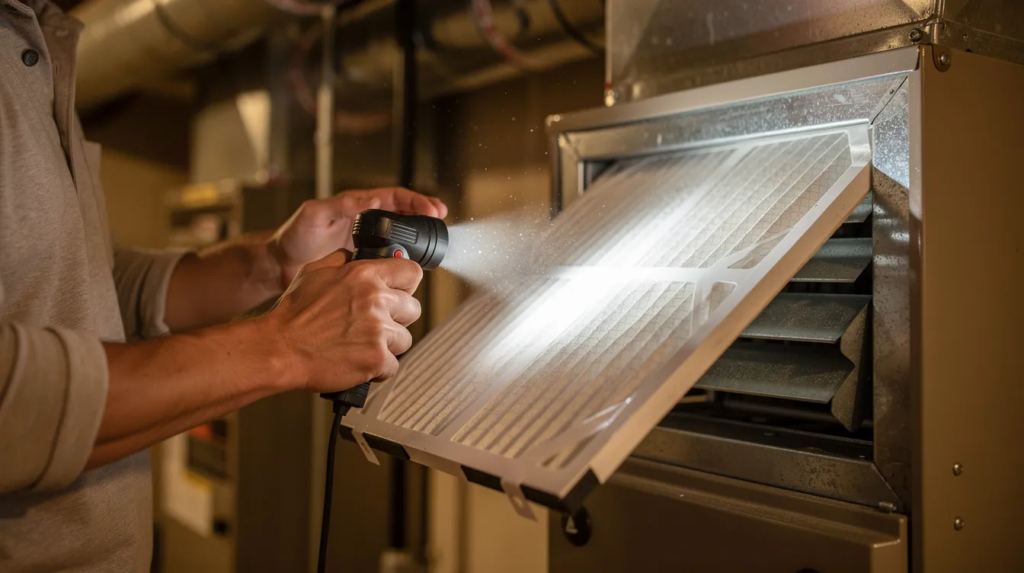
If two or more of these checks show obvious soot or ash, stop DIY efforts and schedule a professional NADCA-style HVAC inspection cleaning. If none show contamination, start with filter replacement and indoor surface cleaning. Homeowners should replace HVAC filters after smoke exposure regardless.
Watch for additional red flags: visible particles blowing from vents when the system starts, persistent smoke odor that gets noticeably stronger when the furnace or AC fan turns on, or recent water intrusion into ducts during firefighting, snow melt, or roof leaks, which creates serious mold growth risk in ductwork. Dust accumulation near vents can also signal the need for duct inspection. Inspection-confirmed contamination requires a professional inspection after any significant smoke exposure. Bee’s technicians use specialized cameras to evaluate ductwork and provide photo documentation that supports insurance claims when smoke damage is suspected.
When Professional Smoke Damage Air Duct Cleaning Is Truly Needed
Air duct cleaning after a fire or heavy smoke should be based on confirmed contamination and risk factors – not fear or aggressive sales tactics. Here is an honest answer about when professional cleaning is justified:
Professional HVAC cleaning or duct restoration is typically needed after an interior house fire, kitchen fire, or furnace puff-back that filled rooms with thick smoke. It is also warranted after a commercial fire in a retail, office, or industrial space where the HVAC system was running during the fire event, when properties adjacent to a burn zone show ash infiltration and visible soot in air ducts or mechanical rooms, when water intrusion into insulated or flex duct occurred during firefighting in Colorado winters (heightened mold risk where mold spores and bacteria growth can take hold), and when unpleasant odors and persistent greasy smoke smell come from vents weeks after other areas have been cleaned. Duct cleaning is recommended when soot is found on the blower or coil, and professional cleaning is critical to restore indoor air quality post-fire.
NADCA’s ACR Standard recognizes confirmed fire and smoke contamination as a valid reason for HVAC cleaning. Flexible ducts and fiberglass duct board, common in Colorado homes built from the 1990s onward, can absorb smoke into porous materials and may require more cautious cleaning or partial replacement when heavily contaminated. Professional duct cleaning costs typically range from $450 to $1,000 depending on system size and severity, and immediate duct cleaning can prevent long-term health risks after a fire; Bee’s offers transparent air duct cleaning pricing and free quotes to help you plan this part of restoration. Ideally, duct cleaning should begin within 24 to 48 hours after fire clearance. Insurance policies often cover smoke damage duct cleaning when properly documented as part of a fire damage restoration claim, and Bee’s can provide detailed scopes and before and after photos to support adjusters and insurance claims.
What Smoke Damage Air Duct Cleaning Involves: Bee's Professional Cleaning Process
Smoke damage HVAC cleaning is more complex than regular duct cleaning that focuses on dust and allergens removal. Fire damage cleaning requires specialized equipment and techniques, and cleaning smoke-damaged ductwork requires a systematic approach aligned with NADCA and IICRC fire damage restoration best practices, similar to Bee’s comprehensive Boulder-area duct cleaning services.
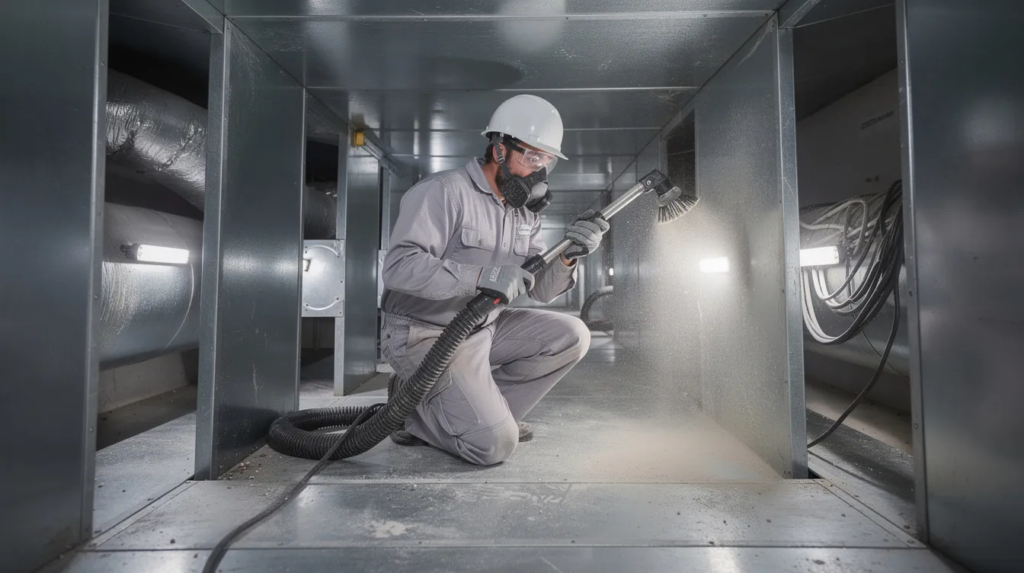
Bee’s uses the Source Removal Method for fire damage air duct cleaning. The HVAC system should be shut down to prevent contamination during cleaning. Negative air pressure is set up to safely remove contaminants – powerful negative air pressure systems are attached to the duct system so airborne particles and dislodged soot cannot escape into living or working spaces. Mechanical agitation using air whips, brushes, and compressed air tools is used to dislodge soot from duct surfaces and duct walls. HEPA-filtered vacuums capture fine soot particles instead of re-releasing them, helping prevent cross contamination throughout the building. Acidic soot can corrode HVAC components and reduce system efficiency, so professional cleaning should address all components of the HVAC system – not just visible air ducts.
The cleaning process covers supply and return air ducts, vents, registers, and grilles, the furnace or air handler cabinet, blower motor and housing, the evaporator coil, and plenums and accessible trunk lines. After mechanical cleaning, odor and contamination control steps follow: containment barriers and negative pressure machines prevent cross contamination, EPA-registered antimicrobial agents may be applied where moisture-related microbial or bacteria growth risk exists, and thermal fogging or other odor-neutralizing treatments address persistent smoke odors inside the ductwork. Sanitization and deodorization involve antimicrobial agents and odor-neutralizing treatments selected for each situation. Personal protective equipment is worn by all technicians throughout the restoration process.
Deep Cleaning After Fire: Typical Step-by-Step Flow for Residential and Commercial Systems
Here is how a typical Bee’s smoke damage cleaning project flows in Colorado, from first call to final verification, for both homes and facilities like offices, schools, clinics, and commercial buildings, and how it builds on Bee’s broader Northern Colorado home air duct cleaning services.
The systematic process begins with an initial phone consultation gathering fire date, cause, building type, and location – whether that is Fort Collins, Greeley, Denver, or Colorado Springs. Next comes an on-site thorough assessment with photos of HVAC ducts, equipment, and surrounding areas, along with a discussion of findings with the owner or property manager. Air duct cleaning is essential for smoke damage restoration, and this assessment determines the full scope.
Setup follows: containment barriers protect furnishings, and negative air machines are placed where needed. Source removal deep cleaning of all accessible duct systems uses NADCA-compliant tools, with special attention to areas where soot collects – return ducts near the fire source, low spots, and near the air handler, drawing on Bee’s experience with Northern Colorado dryer vent and HVAC duct cleaning. Coil and blower wheel cleaning restores airflow, energy efficiency, and clean air delivery. Optional deodorization treatments and, if appropriate, antimicrobial application address moisture-affected areas. Regular duct cleaning focuses on dust and allergens removal, but this level of proper cleaning goes far beyond routine work, much like the specialized air duct cleaning needed after construction or remodeling.
For larger commercial air duct systems, Bee’s may schedule work in phases – nights or weekends – to keep businesses operating. Restoration technicians with restoration certification familiar with Colorado codes, building types, and local wildfire smoke patterns handle every project. Documentation is central: before and after photos of air ducts and HVAC components, a written summary of areas cleaned and methods used, and information the client can share with insurers, tenants, or corporate risk managers. Post-cleaning inspection verifies contamination reduction and system cleanliness.
What Duct Cleaning Can and Cannot Fix After Smoke Damage
Even thorough cleaning has limits. Some smoke odor sources exist outside the HVAC system, and managing expectations upfront is part of doing this work responsibly.
What professional duct cleaning can accomplish:
Remove soot, ash, and smoke residue from metal and most flex duct surfaces
Restore more neutral air from vents and visibly improve air quality
Reduce redistribution of smoke particles and lower indoor particulate counts
Improve HVAC system performance by cleaning coils and blowers clogged with smoke residue
Support HVAC system restoration and protect property value
What duct cleaning alone cannot guarantee:
Complete removal of smoke odor from porous materials such as drywall, insulation, carpet, and upholstery – duct cleaning may not eliminate smoke odors trapped in those materials
Elimination of volatile organic compounds absorbed into building materials during severe or long-duration smoke events
Repair of structural fire damage like charred framing or melted plastic duct components where structural integrity is compromised – those need structural repairs and replacement
Duct cleaning rarely eliminates lingering odors when the source is embedded in building materials beyond the duct system. Duct restoration is critical for preventing long-term health risks, but complementary steps for full fire damage restoration include surface cleaning and HEPA vacuuming of walls, ceilings, and floors, textile cleaning of carpets and furniture, replacement of heavily damaged soft goods, and targeted use of portable air cleaners with activated carbon filters to reduce odor-causing gases. Bee’s focuses on the HVAC and air duct side of the project and often works alongside restoration contractors and indoor air quality consultants to deliver a complete recovery plan. Regular maintenance can prevent the need for extensive cleaning after smoke damage down the road.
Protecting Indoor Air Quality in Colorado After Fire or Wildfire Smoke
Whether or not your ducts need professional cleaning, these practical steps help protect indoor air quality concerns before, during, and after smoke events.
During fire season, monitor local AQI resources like CDPHE and AirNow.gov. Close windows and doors during heavy smoke, seal obvious gaps, and limit outdoor air intake if filtration is poor. Upgrade to higher-efficiency furnace filters (MERV 11–13 where system design allows) and replace them more frequently in smoky months. Consider portable HEPA and carbon air purifiers – portable air cleaners are especially helpful in bedrooms and main living or working areas for reducing airborne particles.
After a fire or extended wildfire smoke event, property owners should thoroughly dust and damp-wipe surfaces, vacuum with a HEPA-equipped vacuum rather than a standard bagless machine, and avoid aggressive DIY duct cleaning using leaf blowers or shop vacs. Those tools can damage ductwork, compromise structural integrity of flex duct connections, and spread contamination – the opposite of what you want. Combustible materials and flammable liquids should be stored safely away from HVAC equipment during any restoration process.
For long-term healthy environment maintenance, schedule routine air duct cleaning every few years for dusty or high-occupancy buildings. Have an HVAC inspection performed annually before heating season. Address water intrusion and moisture issues quickly to prevent hidden mold growth in duct liners and HVAC cabinets – visible damage from moisture often requires immediate attention.
How Bee's Air Duct Cleaning Helps Colorado Homes and Businesses After Smoke and Fire
Bee’s Air Duct Cleaning is a Colorado-based, NADCA-informed specialist in air duct cleaning, HVAC cleaning, and smoke damage restoration for both residential and commercial properties, with a locally owned team described in their about our HVAC cleaning company information. Every technician carries hands-on experience with Colorado’s building types, wildfire patterns, and the unique indoor air quality concerns that come with living along the Front Range.
For businesses, Bee’s provides commercial air duct and HVAC cleaning throughout Colorado for offices, schools, medical facilities, manufacturing, and multi-tenant buildings, including specialized air duct cleaning services in Estes Park and nearby communities. Specialized post-fire air duct cleaning after house fires, building fires, and wildfire smoke events uses source removal, HEPA filtration, and odor control techniques with specialized equipment.
Bee’s approach emphasizes honest assessments based on visible evidence of smoke and soot, adherence to NADCA and industry standards for duct cleaning and HVAC restoration, and clear communication about scope, pricing, and realistic expectations for odor and air quality improvements. The team has experience working alongside Colorado restoration contractors, insurance adjusters, and property managers to integrate thorough cleaning into broader fire damage restoration projects.
If you have had a recent fire or heavy smoke exposure, contact Bee’s for a professional inspection to evaluate your duct system. Schedule a consultation to review inspection photos and options. Bee’s recommends full smoke damage air duct cleaning only when it will actually benefit your indoor air quality and HVAC system – because the right answer starts with knowing what is really inside your ducts.
