
Denver’s dry climate, frequent wildfire smoke events, and ongoing construction activity create persistent indoor air quality challenges for commercial building owners. Whether you manage an office tower downtown, a school in Aurora, or a medical clinic in Lakewood, the condition of your air ducts directly affects the health of everyone inside. This guide explores how commercial duct cleaning works, why it matters for Denver businesses, and what to expect when you schedule a professional cleaning project.
Key Takeaways
Commercial air duct cleaning provides significant operational and health benefits by removing years of accumulated debris from a building’s HVAC system, improving indoor air quality, energy efficiency, and occupant comfort in offices, schools, medical buildings, and industrial facilities across Denver.
Bee’s Air Duct Cleaning provides NADCA-standard commercial HVAC cleaning throughout the Denver metro area and Front Range, focusing on full-system cleaning of the entire HVAC system—not just surface vents.
The National Air Duct Cleaners Association (NADCA) recommends cleaning air ducts every three to five years to maintain HVAC system efficiency, though healthcare, food production, and high-dust facilities often require more frequent service.
Clean ductwork helps reduce respiratory complaints, odors, and dust complaints from tenants and employees, while potentially lowering HVAC strain and energy costs by up to 30%.
Bee’s Air Duct Cleaning offers free on-site inspections and written estimates for commercial air duct cleaning in Denver, Aurora, Lakewood, Centennial, and surrounding cities—contact us to schedule your assessment.
Why Air Quality in Denver Commercial Buildings Depends on Clean Air Ducts
Denver’s semi-arid climate, with average humidity hovering between 30-50% annually, promotes dust accumulation and creates ideal conditions for airborne particles to circulate through commercial HVAC systems. Seasonal temperature inversions trap pollutants close to the ground, while wildfire smoke from events like the 2020 East Troublesome Fire can spike PM2.5 levels to dangerous concentrations that infiltrate commercial buildings through HVAC intake vents.
Commercial HVAC systems constantly recirculate 70-90% of indoor air through extensive duct networks—often spanning 10,000 or more linear feet in mid-size office buildings. Over time, these supply and return air ducts gradually collect dust, pollen, construction debris, and microbial growth. In sealed modern office towers, retail centers, and schools, building occupants may spend 8-10 hours per day breathing this recirculated air, making the cleanliness of ducts a direct factor in health and comfort.
The Environmental Protection Agency ranks indoor air pollution among the top five environmental risks to public health, highlighting the importance of maintaining good indoor air quality. EPA research indicates that indoor air in commercial buildings can be 2-5 times more polluted than outdoor air, especially when HVAC maintenance is neglected. This concentration effect occurs because contaminants accumulate faster than they’re removed in buildings with poor ventilation maintenance.
Bee’s Air Duct Cleaning often finds drywall dust, insulation fibers, and rodent droppings in commercial air ducts in older Denver buildings built before 1990—approximately 40% of the city’s commercial building stock. These contaminants get recirculated every time the system cycles on.
Main IAQ risks for Denver commercial properties include:
Fine dust from high-traffic roadways like I-25 and I-70
Wildfire smoke residue that can persist 6-12 months after major fire events
Pollen from Front Range cottonwoods, triggering allergies in 20-30% of workers
Building renovation debris, including silica dust from nearby construction projects
What Is Commercial Air Duct Cleaning?
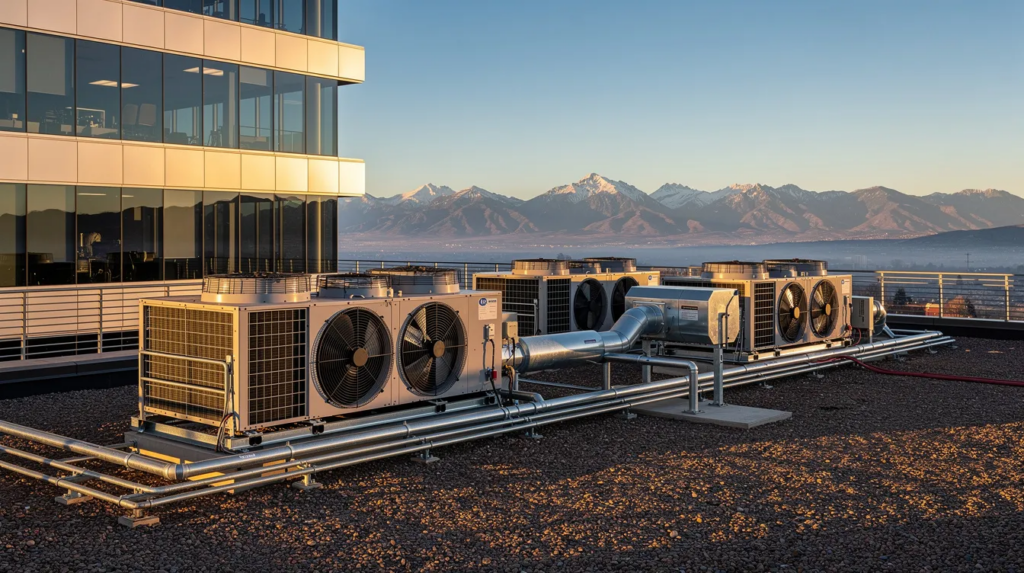
Commercial air duct cleaning is the professional cleaning of all components of a commercial HVAC system, including supply and return ducts, air handlers, evaporator and condenser coils, drain pans, blowers, and registers. The commercial duct cleaning process focuses on source removal to extract contaminants like dust, allergens, and debris from HVAC systems—not simply wiping down visible grilles.
There’s an important distinction between “vent cleaning” (addressing only the grilles and diffusers) and full commercial HVAC system cleaning as recommended by NADCA. Surface-level cleaning ignores 80-90% of system surfaces where most buildup occurs, including coils and plenums that significantly affect air quality and efficiency.
Commercial duct cleaning requires specialized industrial equipment due to larger and more complex systems compared to residential installations. Typical commercial buildings that benefit from air duct cleaning in Denver include:
Office campuses along I-25 with multi-zone VAV systems
Downtown high-rises with chilled beam integrations
Medical clinics requiring HEPA filtration add-ons
Schools with rooftop units and economizers
Hotels with packaged terminal air conditioners
Warehouses in Commerce City and Aurora with high-velocity duct systems
Bee’s Air Duct Cleaning follows NADCA ACR Standard guidelines for source removal, negative pressure, and proper containment on every commercial project.
Main HVAC components cleaned during a commercial project:
Air ducts (supply, return, and exhaust)
Evaporator and condenser coils
Blower assemblies and fan blades
Plenums and mixing chambers
Diffusers, registers, and return grills
How Dirty Air Ducts Affect Indoor Air Quality and Building Occupants
Common complaints in Denver commercial buildings with dirty ducts include musty odors on Monday mornings from microbial volatile organic compounds, visible dust plumes near vents when the HVAC system starts, and increased allergy symptoms among staff. These issues signal that accumulated contaminants are being pushed back into occupied spaces every time the system cycles on.
Contaminated air ducts can lead to poor indoor air quality, which adversely affects employee health and productivity, resulting in absenteeism and lost productivity for businesses. Health and comfort impacts include irritated eyes and throat, more frequent asthma flare-ups, headaches, and general fatigue—symptoms often categorized as Sick Building Syndrome. By cutting airborne pollutants by up to 50%, cleaning reduces these common workplace issues, which cause headaches, fatigue, and respiratory irritation across affected workforces.
Routine commercial duct cleaning is essential to ensure that HVAC systems remain free of dust, debris, and potential mold growth, which can compromise indoor air quality. Professional cleaning removes organic materials that can lead to mold growth in ductwork and identifies moisture issues before they spread harmful spores. Standing water in drain pans, for example, can breed bacteria including Legionella, which then travels through air ducts to affect sensitive occupants.
Bee’s Air Duct Cleaning often documents “before and after” duct conditions for property managers in Denver using photos or video, helping them respond to tenant IAQ complaints with objective evidence.
Specific IAQ issues caused by dirty ducts:
Persistent odors from biofilm decomposition
Visible dust on surfaces despite regular janitorial cleaning
Allergy triggers causing rhinitis in 15-20% of staff
Uneven temperatures from clogged branches creating ±5°F variance between zones
Rapid filter clogging requiring more frequent MERV 13 replacements
Key Benefits of Routine Commercial Duct Cleaning for Denver Businesses
Routine commercial duct cleaning is essential to maintain HVAC efficiency and prevent the buildup of dust, debris, and potential mold growth, which can compromise air quality in facilities such as hospitals and industrial plants. Rather than a one-time cosmetic service, professional duct cleaning integrates into a comprehensive maintenance and IAQ strategy that delivers measurable returns.
High-level benefits for Denver businesses:
Cleaner indoor air and fewer occupant complaints — Specialized tools like HEPA-filtered vacuums and rotary brushes can remove up to 98% of airborne pollutants, including dust, pollen, and industrial byproducts.
More consistent comfort across zones and floors — Restored airflow eliminates hot and cold spots caused by restricted air ducts.
Improved HVAC efficiency and lower utility bills — Cleaning can improve HVAC system efficiency by up to 30%, leading to measurable drops in monthly energy costs.
Extended equipment life — Reduced strain on fan motors and coils helps commercial HVAC systems last 5-10 years longer.
Better compliance with expectations — Supports tenant satisfaction, LEED v4 credits, ESG reporting goals, and health-focused workplace initiatives.
A mid-size office building in Downtown Denver reported reduced dusting frequency by 50%, odor complaints down 70%, and utility bills lower by 18% after Bee’s Air Duct Cleaning completed a full HVAC cleaning process. These energy savings demonstrate the importance of addressing not just visible debris but the entire system.
Facility managers often schedule duct cleaning alongside other annual maintenance activities—filter changes, coil cleaning, and IAQ testing—for maximum benefit and minimal business interruption.
Our Commercial HVAC Cleaning Process in Colorado
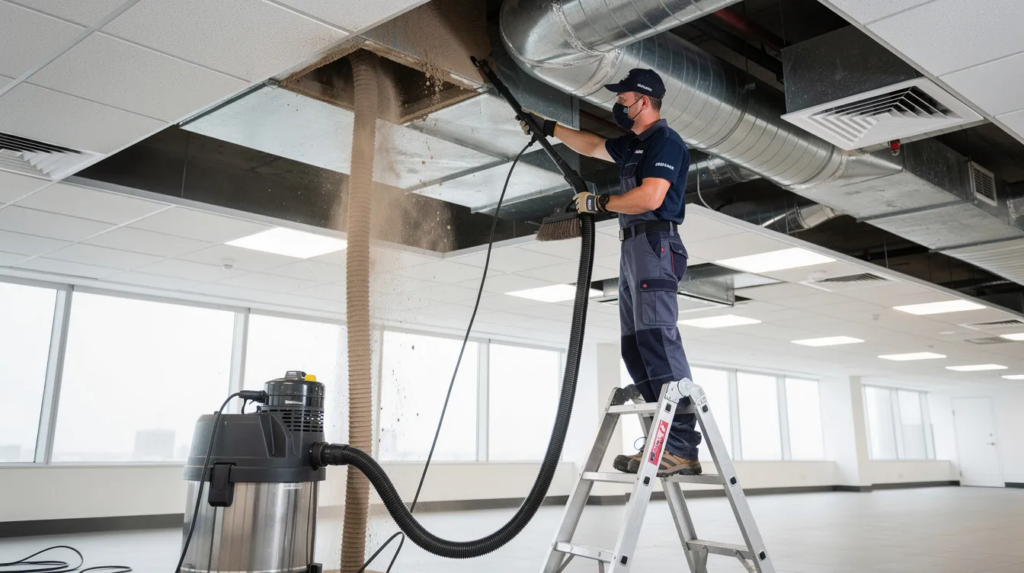
Bee’s Air Duct Cleaning uses a step-by-step, NADCA-aligned cleaning process tailored to each commercial building’s system layout. Cleaning services include inspecting the system, containment preparation, creating negative pressure, agitation and cleaning, component cleaning, and final inspection. Our highly trained technicians adapt the process based on factors like building size, system complexity, and access requirements.
Our process includes the following components:
Site evaluation — On-site walkthrough in Denver or nearby cities, review of mechanical plans, and inspection of air ducts, air handlers, and rooftop units using anemometers and borescopes.
Containment and protection — Laying floor protection, sealing sensitive equipment, and establishing negative pressure to prevent dust migration into occupied spaces.
Access creation — Using existing service openings and access panels; when necessary, cutting and later sealing duct end caps and service openings to reach interior surfaces.
Agitation and source removal — Using rotary brushes (4-8” diameter), air whips, and contact vacuum techniques to break contaminants loose from duct surfaces and HVAC components.
HEPA-filtered vacuum extraction — Placing the commercial HVAC system under continuous negative pressure with truck-mounted vacuums (5,000-20,000 CFM capacity) to pull dust and debris safely out of the building.
Coil, blower, and plenum cleaning — Detailing major components that affect heating, cooling efficiency, and air quality using proper equipment and pH-neutral foaming agents.
Optional sanitizing — Applying only chemicals registered with the EPA as antimicrobial products in air ducts where microbial contamination or odors have been documented.
Final verification — Visual inspection, photos, and discussion with the facility manager or building engineer before demobilization.
Work in Denver commercial buildings is often scheduled evenings or weekends to minimize disruption to tenants and operations. Our technology and practices ensure the highest quality results while protecting your environment and maintaining cleanliness throughout the job.
How Often Should Commercial Air Ducts Be Cleaned in Denver?
There’s no single rule for all commercial properties, but the National Air Duct Cleaners Association recommends that air duct cleaning be performed every three to five years, depending on the level of contaminants present. The Environmental Protection Agency suggests that the frequency of HVAC cleaning should be based on the level of contaminants present, including mold and dust, which varies by building type and use.
Recommended frequencies by facility type:
Standard offices and retail — Every 3-5 years, or sooner after major renovations, water damage, or wildfire smoke events.
Healthcare and dental clinics — Every 2-3 years to meet JCAHO standards and reduce Legionella risks, with more frequent inspection of critical zones.
Schools, daycare centers, and universities — About every 3 years, especially in older buildings with aging HVAC systems where high occupancy accelerates contamination.
Manufacturing, warehouses, and high-dust facilities — Often every 1-2 years, depending on dust generation and industry standards.
Food production or commercial kitchens with overhead HVAC — More frequent inspections and cleaning due to grease accumulation and moisture per ASHRAE guidelines.
Factors like proximity to high-traffic roadways along I-25 or I-70, wildfire smoke seasons, and previous water intrusion can shorten the recommended interval. Many industries must adhere to strict health and safety standards, and regular duct cleaning ensures compliance with OSHA and NADCA standards.
Bee’s Air Duct Cleaning offers recurring maintenance plans and schedule reminders for property managers, so commercial duct cleaning can be coordinated with other HVAC maintenance activities for maximum efficiency and minimal disruption.
Signs Your Commercial HVAC System and Air Ducts Need Cleaning
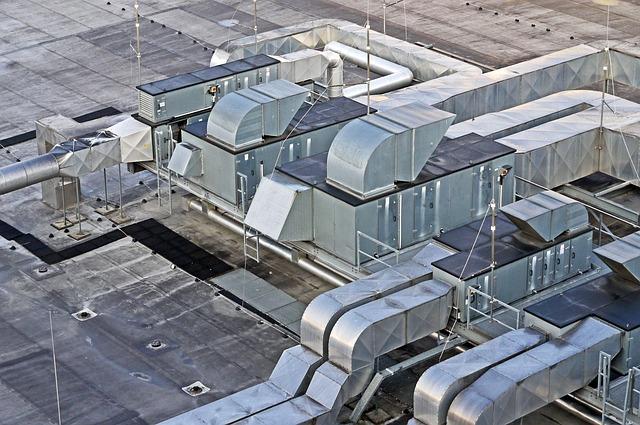
Building engineers, facility managers, and HOA boards should watch for visible and operational clues that indicate it’s time to schedule a professional cleaning. NADCA certified air duct cleaning specialists (ASCS) are required to pass a certification examination and continue their education to maintain their certification, ensuring they’re knowledgeable in HVAC design and cleaning methodologies—they can help assess whether symptoms point to duct contamination.
Practical warning signs to monitor:
Increasing dust on desks, shelves, or merchandise even with regular janitorial service
Persistent odors when the HVAC system starts, especially musty or “old building” smells
Hot and cold spots in the building indicating restricted airflow in some air ducts
Dark streaks or staining on ceiling tiles around diffusers and supply vents
More frequent filter changes due to heavy loading and pressure drops
Occupant complaints about allergies, headaches, or “stuffy air” that are worse inside than outdoors
Evidence of pests, droppings, or nesting material found in mechanical rooms or near ductwork
Fire or smoke damage residue circulating through the system
Visible mold growth on any accessible HVAC surfaces
If any of these symptoms are present in a Denver commercial building, Bee’s Air Duct Cleaning can perform a detailed inspection with cameras and report findings in writing to help you determine next steps.
Why Denver Businesses Choose Bee’s Air Duct Cleaning
Bee’s Air Duct Cleaning is a Colorado-based specialist focused on HVAC cleaning and indoor air quality solutions for both residential and commercial customers. Our team understands the unique challenges Denver buildings face, from winter temperature inversions that trap pollutants to the ongoing impact of recent wildfire seasons.
What sets our service apart:
Local expertise — Experience with Denver-area climate challenges, including winter inversions that elevate PM2.5 to 20-40 µg/m³ and wildfire smoke impacts from 2020-2024 fire seasons.
Commercial focus — Regular work on offices, retail centers, schools, medical suites, and industrial facilities across Denver, Aurora, Lakewood, Highlands Ranch, and Colorado Springs.
Certified technicians — NADCA members committed to industry standards, with ongoing training per 92-hour ASCS certification requirements for our contractor teams.
Full-system approach — We clean the entire commercial HVAC system (air ducts, coils, blowers, plenums) rather than just supply vents, using the proper equipment for thorough source removal.
Transparent process — Detailed proposals, clear timelines, before-and-after documentation, and coordination with building engineers to protect your facility and maintain operations.
We’re fully insured for commercial projects and understand building access requirements, COI documentation, and working around tenants and critical operations. Visit our commercial air duct cleaning page to learn more about how we improve IAQ for Denver businesses.
Planning a Commercial Duct Cleaning Project in the Denver Metro Area
A typical commercial engagement proceeds from first contact through project completion in a structured way designed to minimize disruption and maximize results. Gathering basic information before requesting a quote—building size, number of air handlers, last time ducts were cleaned—helps speed the process.
What facility managers and property owners should expect:
Initial consultation — Phone or on-site meeting to discuss concerns, building type, number of rooftop or mechanical units, and prior HVAC maintenance history.
Site survey — Bee’s technician or project manager inspects air ducts, mechanical rooms, and representative diffusers to scope the cleaning process and access points across the facility.
Written proposal — Includes scope of work, cleaning methods, estimated schedule (often nights/weekends), safety considerations, and investment range based on your specific factors.
Scheduling and communication — Coordination with building management, security, and tenants to minimize disruption, manage access, and control noise during operations.
Execution — Phased cleaning starting with one zone or floor at a time, with daily progress updates for the facility manager to maintain transparency.
Post-project review — Final walkthrough, delivery of photos documenting clean ductwork, and maintenance recommendations including suggested future cleaning intervals.
The importance of proper planning can’t be overstated—it protects your business from unnecessary disruption while ensuring thorough results that improve IAQ and system performance.

Frequently Asked Questions About Commercial Air Duct Cleaning in Denver
How much does commercial air duct cleaning cost for a Denver building?
Commercial air duct cleaning typically starts at a cost of $1,000 to $2,000, depending on the size and complexity of the HVAC system. Factors influencing the cost of commercial duct cleaning include the size of the facility, the amount of HVAC systems and air ducts, accessibility of mechanical rooms and rooftop units, the level of contamination present, and whether coils and other components require detailed cleaning.
Small offices or retail spaces in Denver might start around a few thousand dollars, while multi-story office buildings, schools, or industrial sites can range significantly higher based on scope. NADCA recommends that air duct cleaning should be performed every three to five years, but more frequent cleaning may be necessary in certain environments, which can affect overall cleaning costs over time.
Bee’s Air Duct Cleaning provides customized, written quotes after an on-site survey rather than flat per-vent pricing, which is more accurate and transparent for commercial clients. Proposals can be structured to fit capital planning cycles or phased over multiple fiscal years for large facilities.
Will commercial duct cleaning disrupt my tenants or operations?
Bee’s Air Duct Cleaning typically schedules commercial work during evenings, nights, or weekends in Denver to avoid peak business hours and minimize business interruption. Some noise from vacuum equipment and agitation tools using brushes is unavoidable, but careful planning, clear communication, and zone-by-zone work minimize disruption to tenants and staff.
Critical areas like server rooms, medical suites, or production lines are coordinated closely with facility managers to avoid downtime or contamination risks. Protective coverings and proper containment are used throughout the cleaning process to keep work areas clean and protect surfaces and equipment.
Do I need to shut down my entire HVAC system during cleaning?
Sections of the commercial HVAC system are typically taken offline one at a time while others may remain operational, depending on system design. Bee’s Air Duct Cleaning works with building engineers to plan shutdowns for individual air handlers or zones, often after business hours, to maintain occupant comfort wherever possible.
For certain tasks like coil cleaning or plenum access, temporary shutdown is necessary to ensure worker safety and effective cleaning. This planning is included in the pre-project coordination phase so there are no surprises for tenants or operations teams.
Is commercial duct cleaning required by any codes or regulations in Colorado?
Most Denver commercial buildings are not legally required to perform duct cleaning on a fixed schedule, but must maintain HVAC systems so they do not create health hazards under general building and workplace safety expectations. Many industries must adhere to strict health and safety standards, and regular duct cleaning ensures compliance with OSHA and NADCA standards.
Healthcare facilities, food processing plants, and specialized industrial environments may have stricter internal standards, accreditation requirements, or insurer expectations related to HVAC cleanliness and indoor air quality. Facility managers should review their internal policies, insurance requirements, and any industry-specific guidelines, then use commercial duct cleaning as a documented part of their IAQ and maintenance program. Bee’s Air Duct Cleaning can provide documentation of work completed to support audits, insurance reviews, or tenant IAQ inquiries.
How can I tell if my previous duct cleaning was done properly?
Visually inspect accessible areas such as supply diffusers, return grilles, and interior surfaces of ducts where access panels exist—they should appear free of heavy dust, debris, and buildup. Ask prior contractors for before-and-after photos, a detailed scope of work, and a list of HVAC components cleaned (not just vents) to verify that a full-system cleaning with proper equipment was performed.
If dust and debris are still visible inside ducts, or if odors and IAQ complaints persist shortly after a “cleaning,” the work may have been incomplete or limited to surface vent cleaning. Bee’s Air Duct Cleaning can perform an independent inspection in Denver buildings to assess current duct conditions and recommend whether additional HVAC cleaning is needed to achieve the high level of cleanliness your building requires.
Ready to improve your building’s air quality? Contact Bee’s Air Duct Cleaning today to schedule a free on-site inspection and receive a detailed written estimate for your Denver commercial property. Our team is ready to help you protect your occupants, reduce complaints, and maintain a healthy indoor environment year-round.
