
Colorado’s dry climate, seasonal wildfire smoke, and high-desert dust make cleaning vent surfaces and ductwork more than a cosmetic chore; it’s a matter of health, safety, and energy savings. This guide walks you through what you can handle yourself, when to call a professional, and how Bee’s Air Duct Cleaning serves homes and businesses across the Front Range.
Why Clean Vents Matter in Colorado
Living along the Front Range means your HVAC system works overtime against a unique combination of challenges. Fine dust from unpaved roads and construction sites, pet dander, pollen from open-window seasons, and wildfire smoke particles all find their way into your air ducts and settle on vent covers. Over time, dirty vents become a distribution network for the very contaminants you want to keep out of your living space.
Cleaning air vents improves indoor air quality and helps HVAC systems run efficiently, which translates to lower energy bills and fewer repair calls. On the dryer side, a clogged dryer vent is a genuine fire hazard – one that’s especially common in Colorado townhomes and condos with long vent runs to upper-story or roof exits.
It’s important to understand the difference between a quick surface clean of your registers and grilles versus a deep clean of the entire HVAC system. Wiping down vent covers is routine maintenance any homeowner can do. Full air duct cleaning, however, requires professional equipment and training to reach deep into the duct work where debris builds up over years.
Bee’s Air Duct Cleaning is a Northern Colorado–based, NADCA-oriented specialist serving residential, commercial, and multi-family properties. The rest of this article covers DIY steps you can take today, signs you need a pro, and more tips on what Bee’s can do for your property.
Dirty Air Vents, Air Ducts & Clogged Dryer Vents: Risks You Can't Ignore
Dirty air vents circulate allergens five to seven times daily through your home. Every cycle pushes dust, pollen, pet hair, construction debris, and wildfire smoke residue back into the rooms where your family eats, sleeps, and breathes. Dust buildup in vents can trigger respiratory issues and allergies, hitting asthma sufferers, older adults, and young children hardest.
Mechanically, restricted airflow from dirty air vents and air ducts forces your furnace and AC to work harder. The system draws more energy, components wear faster, and you end up paying more for less comfort. Over time, that strain can shorten equipment life significantly.
The fire risk from a clogged dryer vent deserves special attention. Dirty dryer vents are the leading cause of dryer fires, according to the U.S. Fire Administration. Lint is highly flammable and tends to collect in the long vent runs and roof exits common across Colorado multi-family buildings.
Key risks at a glance:
Reduced home’s air quality from recirculating dust, dirt, and particles
Higher energy bills as HVAC efficiency drops
Increased chance of house fires from lint buildup in dryer vents
Health complaints from occupants – especially in commercial buildings and multi-family complexes where neglected duct cleaning can damage a property’s reputation
How to Clean Air Vents Yourself (Registers & Grilles)
Regular cleaning of accessible vents and registers is beneficial for most homes and takes only a few minutes per vent. This is a surface clean focused on vent covers and the first few inches of the vent duct opening – not a replacement for professional air duct cleaning.
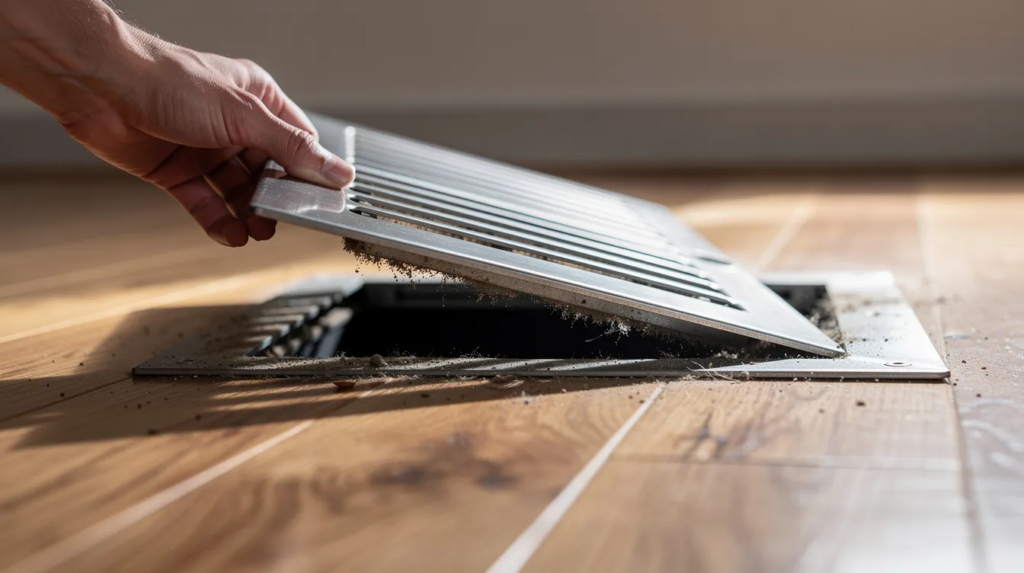
Before you start, turn off the HVAC system at the thermostat or breaker. The basic cleaning process includes removing vent covers, wiping and washing them, vacuuming the vent opening, and cleaning the surrounding wall or floor area. Stick to a household vacuum cleaner with a hose attachment and mild detergent. Avoid harsh chemicals that could off-gas into your home’s air.
In dusty or high-traffic Colorado homes – especially those with pets or near construction zones – plan to repeat this basic clean every one to three months.
Step-by-Step: Removing and Cleaning Vent Covers
Floor registers usually lift straight up. Wall and ceiling vents typically require a screwdriver to remove.
Lay down plastic sheeting or an old towel under ceiling vents to catch falling debris and dust.
Soak dirty vent covers in warm water with a small amount of dish soap. Use a damp microfiber cloth or soft brush to gently scrub both sides. Dry completely before reinstalling.
Inspect for rust, peeling paint, or bent fins. Replace old vent covers if they restrict airflow or look worn – it’s an inexpensive upgrade that improves both airflow and aesthetics.
Wipe the surrounding wall or floor area to remove any settled dust before snapping covers back into place.
Vacuuming Inside the Duct Opening Safely
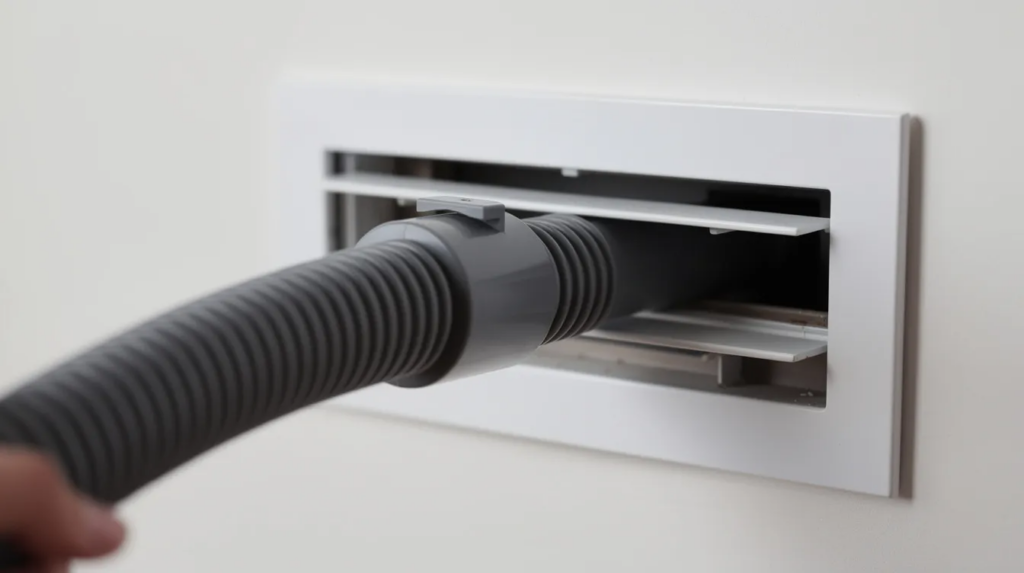
Insert a vacuum hose with a brush attachment a short distance into the air duct or return air vent to remove loose dust, pet hair, and visible debris. A standard household vacuum works fine for this step.
Do not force tools deep into the ductwork or use DIY rotating brushes in fragile flex-duct or old metal ducts – you risk damaging joints, tape, and insulation. If you see heavy buildup, matted debris build, mold-like spots, or construction dust, that’s a clear sign professional air duct cleaning is needed.
Wear a dust mask and eye protection, especially in older Colorado homes or any home recently completed with renovation work or affected by wildfire smoke.
DIY Dryer Vent Cleaning: When It's Safe and What You Can Do
Cleaning a dryer vent can take under two hours for a straightforward setup. But not every vent layout is straightforward. Colorado homes vary widely – some have short, straight runs to an exterior vent on the wall, while others route through ceilings to a second-story or roof exit.
Signs of a clogged dryer vent:
Clothes taking more than one cycle to dry
The dryer or laundry room feels unusually hot
A burning or musty odor during operation
Visible lint around the exterior vent hood or lint trap area
For short, straight runs, a store-bought dryer vent cleaning kit combined with a vacuum to collect loosened lint is usually sufficient. Shut off power before starting – and close the gas valve if you have a gas dryer. Be cautious moving heavy appliances away from walls to avoid damaging rigid vent pipe.
If your home has long runs, roof-exit vents, or metal flex duct routed through ceilings, call Bee’s for a safer, more thorough professional dryer vent cleaning.
Basic DIY Steps for Cleaning a Dryer Vent
Unplug the dryer and gently pull it from the wall.
Disconnect the vent hose from the back of the dryer.
Clean the lint trap housing with a vacuum hose.
Use a dryer vent cleaning brush to reach a few feet into the duct from both the interior and exterior sides, rotating the brush to loosen lint.
Vacuum all loosened lint and debris from the accessible duct.
Check the exterior vent flap – it should open freely when the dryer runs, confirming air can exit properly.
The U.S. Department of Energy recommends rigid venting materials. Avoid plastic or foil accordion-style hoses, which restrict airflow and increase fire risk. Smooth metal vent pipe is the safer, more efficient choice. Clean dryer vents also improve appliance efficiency and lifespan, saving you money over time.
When DIY Vent Cleaning Isn't Enough: Signs You Need Professional Air Duct Cleaning
Surface vent cleaning handles what you can see. But contaminants hide deep inside supply lines, return plenums, and trunk lines where no household vacuum can reach deep enough. Here’s when to schedule professional service:
Visible dust streaks reappear on supply registers shortly after you clean air vents
Musty or stale odors when the HVAC system kicks on
Unexplained allergy or asthma flare-ups among household members
Visible mold, evidence of rodents, or heavy dust inside air vents – all indicators the EPA recommends as triggers for professional duct cleaning
Recent interior renovations, wildfire smoke infiltration, or water damage
Rodent or insect activity in the ducts
Note: dust on return registers is normal and does not always indicate the need for duct cleaning. But when multiple signs stack up, a professional assessment is the smart move.
Multi-family buildings, commercial offices, schools, medical offices, and gyms should follow stricter maintenance schedules due to higher occupancy and greater contaminant loads. Professional duct cleaning uses specialized equipment such as truck mounted vacuums, negative pressure systems, rotary brushes, and compressed air tools. These achieve a deep clean far beyond what any DIY process can accomplish.
What Professional Air Duct Cleaning Looks Like (Bee's Process in Colorado)
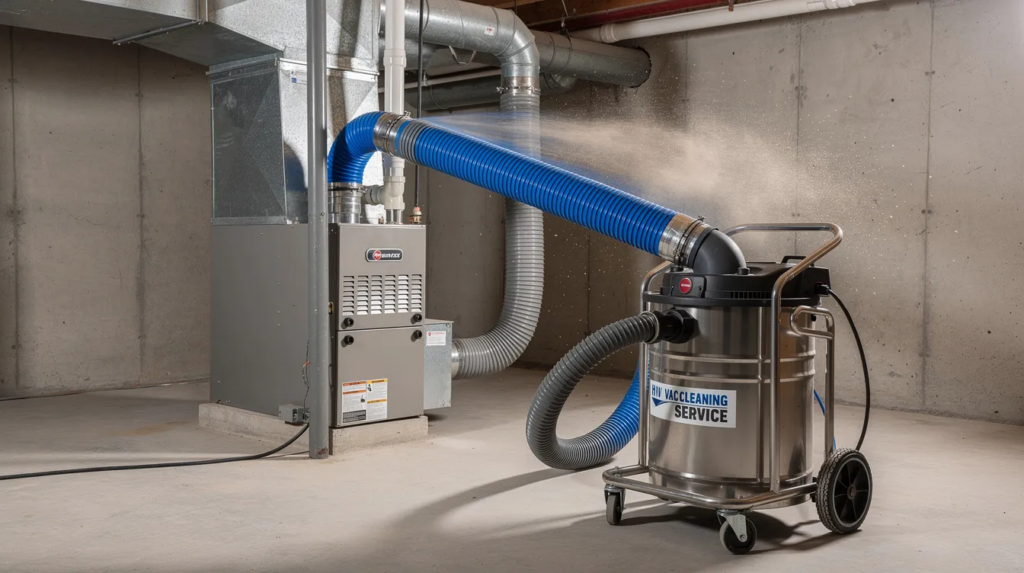
Bee’s Air Duct Cleaning follows the Source Removal Method, considered the gold standard by NADCA. The entire system is placed under continuous negative pressure using a large truck mounted vacuum connected to the plenum. This prevents contaminants from blowing into your living space during the cleaning process.
Technicians then work through each supply and return vent, using agitation tools like brushes, air whips, and compressed air nozzles to break contaminants loose from the walls of the ductwork. In a typical Northern Colorado home air duct cleaning, the scope covers supply and return air ducts, registers and grilles, plenums, blower housing, motor, coils, and all accessible components. You can learn more about the best duct cleaning methods and why source removal outperforms alternatives.
What you can expect after a professional clean:
Improved air quality with noticeably less dust settling on furniture
More even heating and cooling temperatures room to room
Quieter system operation
Potentially lower energy bills – clean air ducts improve HVAC efficiency and reduce energy costs
Bee’s technicians protect your finishes and furnishings, seal all access openings properly, and leave the home as clean as they found it. If microbial contamination is confirmed, Bee’s can discuss EPA-registered antimicrobial treatments following industry standards. Curious about timing? Here’s a look at how long air duct cleaning takes.
Special Considerations for Colorado's Climate & Wildfire Smoke
Seasonal wildfire smoke and high outdoor dust levels accelerate debris buildup inside air ducts and on vent covers along the Front Range. After heavy smoke seasons or nearby fires, scheduling professional air duct cleaning is especially important for households with respiratory sensitivities.
Bee’s has years of experience helping Colorado homes and businesses address smoke-related contamination in their entire HVAC system, restoring clean air to spaces that have absorbed months of particulate exposure.
Bee's Services for Different Property Types: Homes, Multi-Family & Commercial
Cleaning vent and air duct needs differ depending on the property type.
Single-family homes: Bee’s residential service focuses on removing dust, pet dander, allergens, and other contaminants from your home’s ductwork for healthier indoor air quality.
Multi-family properties: Every multi-family project is unique. Bee’s schedules an onsite inspection, coordinates with property management, and requests access to at least one unit to evaluate both dryer vent and air duct conditions before scoping the work.
Commercial buildings: From offices and warehouses to medical and industrial facilities, Bee’s commercial air duct cleaning service follows NADCA-informed practices while minimizing downtime. The team has served leading organizations across Northern Colorado.
Bee’s also offers dedicated dryer vent cleaning services for shared laundry rooms and commercial laundries, where a clogged dryer vent can pose major fire and liability risks. Decision makers – HOA boards, facility managers, property owners – receive clear scopes of work, documentation, and maintenance recommendations tailored to each property.
How Often to Clean Air Vents, Air Ducts & Dryer Vents in Colorado
One should regularly check HVAC filters and replace them according to the manufacturer’s instructions – that alone makes a measurable difference. Beyond filters, here’s a practical Colorado-specific schedule:
Component | Frequency | Notes |
|---|---|---|
Surface air vents (registers, grilles) | Every 1–3 months | Wipe or vacuum during HVAC filter changes |
Whole-home air duct cleaning | Every 3–5 years | Sooner with pets, allergies, or recent construction |
Dryer lint trap | After every load | Non-negotiable for fire safety |
Exterior dryer vent inspection | Every few months | Confirm the flap opens freely |
Professional dryer vent duct cleaning | At least once a year | Semiannually for large families or long vent runs |
Commercial/school/healthcare HVAC | Annually or biannually | Based on occupancy and industry requirements |
The National Air Duct Cleaners Association recommends cleaning every three to five years, while the U.S. Environmental Protection Agency recommends duct cleaning as needed. Clean air ducts sooner if you have pets or allergies. Regular vent cleaning can minimize dust and improve air quality throughout your home, and routine maintenance keeps your entire system performing at its best.
Choosing a Vent & Air Duct Cleaning Company in Colorado (Why Bee's)
Not every company offering vent cleaning delivers the same level of service. Here’s what to look for – and what to avoid:
Key criteria:
Experience with both air ducts and dryer vents
Adherence to NADCA standards
Proper insurance and licensing
Clear written estimates before work begins
Transparent explanation of the cleaning method used
Red flags: Beware of “too good to be true” coupon offers that promise whole-house cleaning for an unrealistically low price. These operations typically clean only a few vents, then upsell aggressively once they’re inside your home.
Bee’s Air Duct Cleaning brings over 11 years of experience in Colorado, with NADCA-certified technicians on every job. The company uses industry-leading negative pressure equipment and source removal techniques – not shop vacuums or basic surface cleaning. From single-family homes to large commercial facilities, Bee’s has the track record and the tools to improve air quality across every property type.
Ready to breathe cleaner air? Contact Bee’s Air Duct Cleaning today to schedule a home, multi-family, or commercial inspection and get a tailored plan for cleaner vents and a healthier space.
