
Why HVAC Cleaning Matters in Colorado
Your HVAC system is made up of several connected components: a furnace or air handler, an air conditioner or heat pump, ductwork running through walls and ceilings, and the vents in every room. Each part collects dust, dirt, and contaminants over time. In Colorado’s dry, dusty climate, that accumulation happens faster than in most states.
A NOAA/University of Colorado study of 15 Colorado homes measured average indoor PM₂.₅ at 8.1 µg/m³, with an indoor-to-outdoor ratio of 1.6. That means indoor sources, including recirculated dust from a dirty HVAC system, contribute more particulate matter than what drifts in from outside. Add wildfire smoke events from recent fire seasons, construction dust along the I-25 corridor, and Northern Colorado’s ongoing development, and your system’s filters and ducts take a heavy hit.
HVAC cleaning improves indoor air quality by removing allergens like pollen, pet dander, and fine dust. It also lowers energy bills, reduces strain on components, and extends equipment life. Bee’s Air Duct Cleaning is a woman-owned, Longmont-based company with over 8 years in business. We place a NADCA-certified technician on every job and serve homeowners, multi-family properties, and commercial buildings across Northern Colorado. This article provides a step by step guide for safe DIY cleaning tasks, explains what should be left to professionals, and shows where Bee’s can help.
How HVAC Cleaning Works: From Air Filters to Ductwork
Cleaning your HVAC system covers more than wiping down vents. It includes air filters, the blower motor, coils, the furnace or air handler, supply and return air ducts, and the outdoor unit.
Air moves through a forced-air system in a loop: return grilles pull room air in, it passes through a filter, moves across the blower motor into the furnace or air handler, crosses the indoor evaporator coil, then travels through supply ducts and out registers. The outdoor unit (condenser) expels heat from the cooling system. Dirt buildup on coils reduces their ability to absorb heat, and dust and debris can restrict airflow at any point in this chain.
HVAC systems should be free of blockage in ventilation pathways. That is why NADCA-standard cleaning addresses all accessible components, not just the ductwork. Bee’s takes this system-wide approach for both residential and commercial HVAC cleaning.
Signs Your HVAC System Needs Cleaning (Home and Commercial)
Dirty HVAC components produce symptoms that Colorado property owners often notice during heating and cooling seasons, especially when allergies flare up.
Visual signs:
Gray or black dust on supply registers and return grilles
Visible debris inside vents or clogged air filters
Lint accumulation around dryer vent covers
Performance signs:
Weak or uneven airflow between rooms
Longer run times or more frequent cycling
Rising energy bills compared to prior seasons; a dirty air conditioner can increase energy consumption by forcing the system to work harder
Air quality signs:
Musty or smoky odors when the system turns on
Increased allergy or asthma symptoms after wildfire smoke events or renovations
In commercial spaces, watch for employee complaints about stuffy air, odors in conference rooms, or dust accumulation around ceiling diffusers. Clean supply and return vents are necessary for unobstructed airflow in both settings.
If you suspect mold growth inside ducts or on components, or if wildfire smoke has recently entered your building, skip DIY and schedule a professional inspection. Indoor humidity control is crucial in preventing HVAC mold growth, and a trained technician can assess whether microbial contamination is present.
Tools and Supplies for Safe AC and HVAC Cleaning
Basic household tools handle most AC and HVAC maintenance tasks. Certain equipment, however, will damage components and void warranties.
Safe DIY tools:
Vacuum cleaner with a soft brush attachment for cleaning coils, grilles, and register openings
A soft bristled brush (or fin comb) for straightening bent condenser fins; a soft-bristle brush is essential for cleaning AC fins without bending them further
Microfiber cloths to wipe surfaces
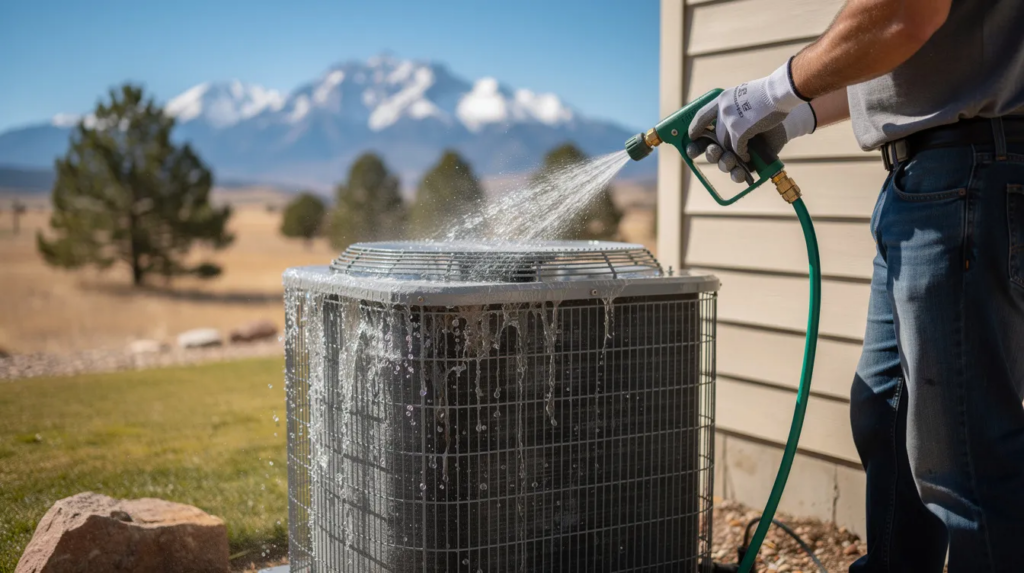
Garden hose with a gentle spray nozzle for the outdoor unit
Screwdriver for grille removal
Suitable cleaning solutions:
A mild detergent mixed with water is suitable for AC cleaning on registers and exterior surfaces
Diluted white vinegar for non-metal plastic registers
Manufacturer-approved coil cleaners for outdoor coils
What to avoid: Never use a pressure washer on an AC unit to avoid damage to delicate fins and coil surfaces. Avoid aggressive wire brushes on coils and harsh chemicals like bleach on metal components.
Bee’s uses professional-grade negative-pressure vacuums and agitation tools (air whips, brushes, compressed air nozzles) as part of our Northern Colorado dryer vent and air duct cleaning services that are not practical or safe for most homeowners to operate.
Step-by-Step Guide: Basic HVAC and AC Unit Cleaning You Can Do Yourself
This guide covers maintenance tasks Colorado homeowners can perform between professional cleanings. Always shut off power at the thermostat first. For work near the blower or AC unit, also flip the breaker.
Replace or clean air filters. Locate the filter slot near the furnace or return grille. Check the size printed on the filter frame and match the manufacturer-recommended MERV rating. Change HVAC filters every 30 to 90 days for optimal performance. In homes with pets or during wildfire smoke episodes, replace them every 30 days. Clean filters reduce strain on HVAC systems and save energy. Never run the system with no filter installed.
Clean registers and grilles. Remove them with a screwdriver, wash metal registers in warm soapy water, and use a soft brush and vacuum to remove dust from duct openings within arm’s reach. Let each register dry completely before reinstalling.
Clean the outdoor unit. Shut off power at the disconnect box. Clear leaves, grass, and vegetation for at least 2 feet around the condenser. Remove exterior debris from the AC unit regularly. Gently clean bent fins with a soft brush. Rinse the coils with a garden hose from the outside in; never use a pressure washer. Cleaning coils restores optimal airflow and heat transfer. Let the unit dry before restoring power.
Indoor AC unit maintenance. Vacuum accessible dust around the furnace or air handler cabinet. Wipe exterior surfaces with a damp cloth. Make sure no storage items obstruct airflow at return vents or around the equipment.
Tasks involving opening the blower compartment, cleaning the blower motor or indoor evaporator coil, or entering ductwork should be left to a professional like Bee’s Air Duct Cleaning. These components involve live wiring, refrigerant lines, and confined spaces that pose safety hazards.
Special Note: Dryer Vent and Exhaust Duct Cleaning
The dryer vent is not part of your air conditioning system, but it is a critical duct in Colorado homes and a fire hazard when clogged with lint.
Check for lint buildup at the exterior vent hood, clothes taking longer than one cycle to dry, or a laundry room that feels unusually hot after a cycle. You can vacuum the flexible hose behind the dryer and gently brush the first accessible section of duct yourself.
Second-story and roof dryer exhausts, long duct runs, and multi-family shared dryer vents need professional dryer vent cleaning. Bee’s handles all exit locations, including roof and tall exterior walls, and can provide a detailed air duct cleaning cost estimate tailored to your system.
What Professional HVAC and Duct Cleaning Includes (Beyond DIY)
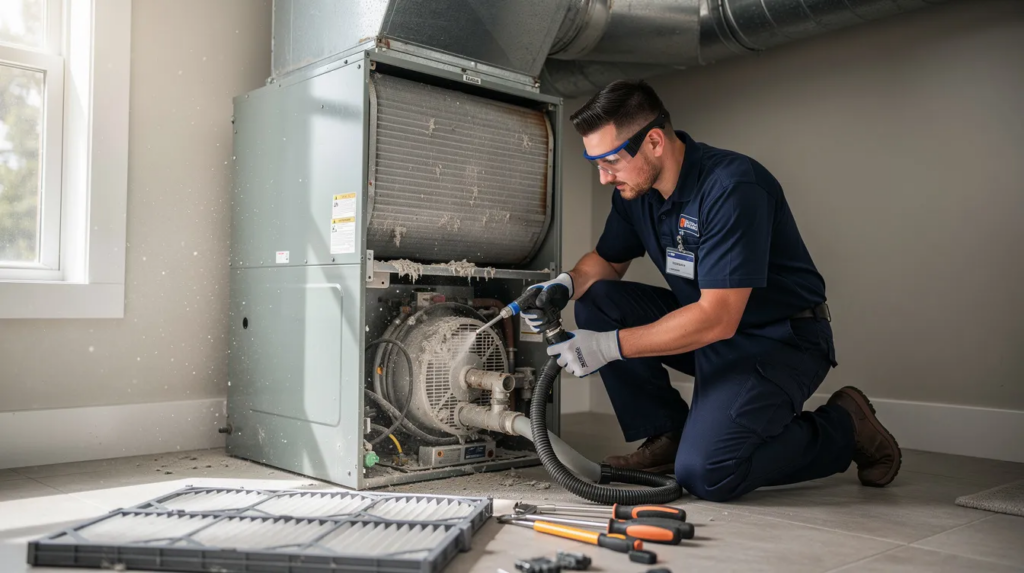
Light homeowner cleaning covers filters, grilles, and the outdoor unit. Full-system ductwork cleaning goes deeper. Bee’s uses a method called source removal: the entire HVAC system is placed under continuous negative pressure by connecting a powerful vacuum to the plenum (where the furnace and ductwork meet). This stops contaminants from blowing into your living space during cleaning.
With negative pressure established, technicians work through each supply vent and return vent using agitation tools, including brushes, air whips, and compressed air nozzles, to break loose dirt, grime, allergens, and debris. They clean trunk lines, branch ducts, registers, the blower motor and housing, and accessible evaporator coil surfaces.
Routine cleaning reduces the risk of microbial growth on moist coil surfaces and condensate pans, and it is especially important after remodeling projects that leave behind heavy construction dust in ductwork. Antimicrobial treatments, when used, should be EPA-registered and applied only after mechanical cleaning and only when a specific issue justifies it. Access panels may be created and carefully resealed to reach hidden duct sections; this is not something homeowners should attempt.
Residential, Multi-Family, and Commercial Projects in Colorado
Cleaning needs differ between a single-family home, an apartment complex, and a commercial building, and properties in mountain communities may benefit from specialized Estes Park air duct cleaning schedules due to unique weather and wildfire smoke exposure. Residential projects often follow a remodel, a move into a previously owned home, or a spike in allergy symptoms, and many homeowners schedule Boulder air duct cleaning services at the same time to reset indoor air quality.
For multi-family buildings, Bee’s requires an onsite inspection and access to at least one unit, because each complex has unique duct layouts and shared dryer systems that affect scope and pricing. For commercial properties, Bee’s cleans offices, medical facilities, schools, and light industrial spaces, focusing on reliable performance of the entire system, employee comfort, and efficient operation with dedicated Denver-area air duct cleaning services. Property managers and decision makers should schedule a walkthrough to assess system complexity and any smoke or construction contamination.
How Often to Clean Your HVAC System in Colorado
Cleaning frequency depends on property type, system usage, and local conditions. Here are general guidelines:
Task | Frequency |
|---|---|
Inspect or replace air conditioner filters | Every 30 to 90 days |
Visual check of registers and outdoor AC unit | Each season |
Professional air duct cleaning | Every 3–5 years (typical homes) |
Professional AC cleaning | At least once a year |
Post-renovation or post-smoke-event cleaning | As soon as possible |
Factors that increase cleaning needs include multiple pets, residents with respiratory conditions, heavy furnace use in cold Front Range winters, and frequent AC use during hot, dry summers. A dirty air conditioner can increase energy bills; dirty condenser coils alone can spike electricity costs by 20–30% due to longer runtimes. Regular HVAC maintenance is essential for peak efficiency and extends the lifespan of the system. Annual HVAC inspections can prevent high repair costs, and scheduled inspections help address dust buildup in ductwork before it becomes a larger problem. |
For commercial buildings, more frequent professional cleaning is common due to higher occupancy and code requirements. Bee’s can help homeowners and property managers develop a custom maintenance plan based on building use, system age, and cleaning history.
When to Call Bee's Air Duct Cleaning Instead of DIY
DIY maintenance keeps your system running between professional visits, but it has limits. Professional cleaning can prevent costly HVAC breakdowns and addresses contaminants you cannot reach with household tools.
Call Bee’s when you encounter:
Suspected mold inside ducts or on coils
Persistent musty or smoky odors that regular cleaning does not resolve
Visible debris blowing from vents when the system runs
Post-construction dust throughout the system
Signs of pests in ductwork
Second-story or roof dryer vents, tall commercial ceilings, or complex multi-unit HVAC systems
We serve homeowners, multi-family communities, and commercial clients across Larimer, Weld, Boulder, Jefferson, and Adams counties with the equipment and training to clean your entire HVAC system safely.
Contact Bee’s for a quote or an onsite assessment. Cleaner ducts, safer dryer vents, and a heating and air conditioning system that does not have to work harder than it should; that is what a professional cleaning delivers. When you call, you will talk to a Bee’s staff member, not a call center.
